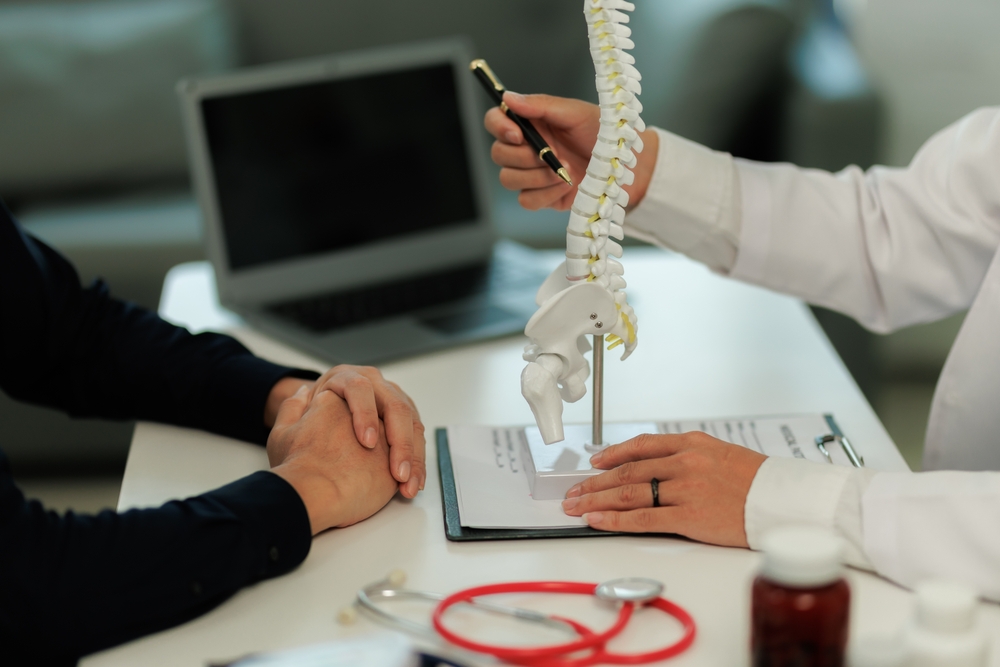
Degenerative disc disease can cause persistent or recurring back or neck pain, stiffness, and difficulty with everyday activities. Despite its name, degenerative disc disease is not necessarily a traditional “disease.” It describes age- or use-related changes in the spinal discs that may or may not cause symptoms.
The good news is that surgery is not the only treatment option and is often not the first approach. Many people can manage their symptoms with conservative, non-surgical treatments designed to reduce pain, improve mobility, and restore function.
The appropriate treatment depends on several factors, including the location and severity of symptoms, whether a spinal nerve is irritated or compressed, overall health, and how the body responds to treatment.
What Is Degenerative Disc Disease?
Between each vertebra in the spine are flexible discs made of cartilage and connective tissue. These discs act as shock absorbers and allow the spine to bend and move.
As we age, spinal discs can lose water content and become less flexible, making them more susceptible to small tears and other structural changes. These changes can occur anywhere along the spine and do not always cause pain. When disc degeneration is associated with symptoms, they may include:
- Low back or neck pain
- Stiffness
- Pain that comes and goes
- Symptoms that worsen with prolonged sitting or certain movements
- Muscle tightness or spasms
- Pain that travels into an arm or leg
- Numbness or tingling
- Weakness in an arm or leg
Disc degeneration may appear on an MRI or other imaging study, but imaging findings do not always correspond with a person’s symptoms. A healthcare professional should evaluate the complete clinical picture, including symptoms, physical examination findings, and appropriate imaging, to help determine the likely source of pain.
Physical Therapy
Physical therapy can play an important role in a non-surgical treatment plan for degenerative disc disease. A physical therapist can develop a program based on your symptoms, physical limitations, and goals. Treatment may focus on improving strength, flexibility, mobility, posture, balance, and overall function. A physical therapy program may include:
- Core strengthening
- Back and abdominal stabilization
- Stretching
- Mobility exercises
- Aerobic conditioning
- Posture and body mechanics training
- Specific strengthening and range-of-motion exercises
- Therapeutic taping or bracing when appropriate
Physical therapy can also teach you safer ways to bend, lift, sit, and move to reduce unnecessary stress on your spine. Consistency is important. Following the prescribed program over time is generally more useful than relying on occasional sessions alone.
Exercise and Movement
When your back hurts, exercise may be the last thing you want to do. However, prolonged inactivity or bed rest can contribute to weakness and reduced function. For many people, appropriate physical activity is an important part of managing chronic back or neck pain. Depending on your symptoms and overall health, low-impact activities may include:
- Walking
- Swimming
- Water-based exercise
- Stationary cycling
- Light resistance training
- Low-impact aerobic activity
Start gradually and choose activities that your body can tolerate. If a particular movement causes significant pain, numbness, tingling, or weakness, stop the activity and speak with your healthcare provider before continuing.
Anti-Inflammatory and Pain Medications
Medication may be used to help manage pain associated with degenerative disc disease, particularly during periods when symptoms become more intense. Depending on your individual situation, a healthcare provider may recommend nonsteroidal anti-inflammatory drugs (NSAIDs) or other pain-relieving medications as part of a broader treatment plan.
NSAIDs can help reduce pain and inflammation for some people, but they are not appropriate for everyone and may cause side effects or interact with other medications. Talk with your healthcare provider before using an NSAID, particularly if you have kidney disease, a history of ulcers or gastrointestinal bleeding, heart disease, take blood-thinning medication, or have other medical concerns. Medication is generally most effective when used as part of a comprehensive treatment plan rather than as the only approach.
Heat and Cold Therapy
Heat and cold therapy may provide temporary relief from certain types of back or neck discomfort. A heating pad or warm shower may help relax tight muscles and reduce stiffness. An ice pack may help reduce pain after an activity that aggravates symptoms.
Always protect your skin and avoid applying extreme temperatures directly to the skin. If you are unsure whether heat or cold is appropriate for you, ask your healthcare provider.
Epidural Steroid Injections
Degenerative changes in the spine can sometimes contribute to radiculopathy, which occurs when a spinal nerve becomes irritated or compressed and causes pain that travels into an arm or leg. An epidural steroid injection may sometimes be used to reduce inflammation around an irritated nerve and provide temporary pain relief.
These injections do not reverse disc degeneration. Instead, they may help reduce pain enough to make movement and physical therapy more manageable. Whether an epidural injection is appropriate depends on your symptoms, physical examination, medical history, and diagnostic findings.
Facet Joint Injections and Medial Branch Blocks
Not all spinal pain comes from the discs. Facet joints are small joints located toward the back of the spine. These joints can become painful or inflamed and may contribute to back or neck pain.
If a healthcare provider suspects that the facet joints are contributing to your symptoms, a facet joint injection may be considered. Depending on the situation, injections can sometimes provide pain relief and help determine whether the facet joints are a likely pain source. Medial branch blocks can temporarily numb the nerves that carry pain signals from the facet joints. For appropriately selected patients who respond positively to diagnostic medial branch blocks, radiofrequency ablation may be considered.
Radiofrequency Ablation
Radiofrequency ablation (RFA), sometimes called facet rhizotomy, uses radiofrequency energy to interrupt pain signals from certain nerves associated with the facet joints. RFA does not repair or reverse disc degeneration. Instead, it may reduce pain from facet joint-related conditions in appropriately selected patients.
A diagnostic evaluation is generally performed before considering this procedure to determine whether the facet joints are likely contributing to the pain.
Lifestyle and Weight Management
Your spine supports your body throughout the day, so maintaining a healthy weight may help reduce mechanical stress on the spine and surrounding joints. For people who are overweight or obese, weight management may be an important part of a broader treatment plan. Other healthy habits can also support overall function and quality of life, including:
- Eating a balanced diet
- Staying physically active
- Getting adequate sleep
- Avoiding tobacco use
- Taking regular movement breaks
- Using proper lifting techniques
Before beginning a new exercise or weight-management program, talk with your healthcare provider about an approach that is appropriate for your health and physical condition. Be cautious of products or supplements that claim to reverse disc degeneration. There is no simple pill or supplement that can restore damaged spinal discs.
Posture and Ergonomics
Poor posture does not necessarily cause degenerative disc disease, but it can contribute to increased discomfort or place additional stress on the spine. If you spend much of your day at a desk, consider:
- Keeping your computer screen near eye level
- Supporting your lower back
- Keeping your feet supported
- Using a footrest if necessary
- Taking regular breaks to stand and move
If your work involves lifting, pushing, or pulling, learning proper body mechanics can help reduce unnecessary stress on your back. Small ergonomic changes can make a meaningful difference when repeated movements or prolonged positions contribute to symptoms.
Activity Modification
Having degenerative disc disease does not necessarily mean you need to stop doing the activities you enjoy. Instead, you may need to modify certain activities to reduce stress on your spine.
If your work or hobbies involve repetitive movements, consider taking more frequent breaks, changing positions, reducing the load, or adjusting your technique. During exercise, avoid movements or positions that consistently worsen your symptoms. A balanced program that supports overall fitness without aggravating your condition may be more sustainable.
Cognitive Behavioral and Mind-Body Therapies
Chronic pain can affect more than the body. It may interfere with sleep, mood, daily activities, and overall quality of life. Cognitive behavioral therapy (CBT), mindfulness, and other mind-body approaches may complement physical and medical treatments by helping people develop strategies for coping with persistent pain and reducing stress.
This does not mean chronic pain is simply psychological. Chronic pain involves complex interactions between the nervous system, sleep, mood, behavior, and other factors. Addressing these factors as part of a comprehensive treatment plan can help support long-term pain management.
Regenerative Medicine: What You Should Know
Regenerative medicine treatments are increasingly marketed for degenerative disc disease and other chronic pain conditions. However, evidence varies considerably between specific treatments, and some procedures remain investigational or have limited evidence for particular uses. Before considering an expensive regenerative treatment, discuss the procedure with a qualified healthcare professional and ask questions such as:
- What evidence supports this specific treatment?
- Is the treatment FDA-approved for this use?
- What are the potential risks?
- What other treatment options are available?
- What results can realistically be expected?
- How much scientific evidence supports the procedure?
A qualified medical professional can help you understand the potential benefits, limitations, risks, and alternatives.
When Should You See a Pain Management Specialist?
Consider speaking with a pain management or spine specialist if your pain:
- Persists despite conservative treatment
- Interferes with work, hobbies, or daily activities
- Disrupts your sleep
- Prevents you from exercising
- Travels into your arms or legs
- Is associated with numbness or tingling
- Leads to increasing reliance on pain medication
- Continues to return after treatment
A pain management specialist can evaluate your symptoms and help identify potential sources of pain. Treatment should be based on your symptoms, physical examination, and overall condition rather than an MRI finding alone.
When Is Surgery Considered?
Most people with degenerative disc changes do not automatically need surgery. Surgical treatment may be considered in certain situations, such as when appropriate conservative treatments have not provided sufficient improvement or when specific structural problems are causing significant symptoms. The decision is individualized and may depend on factors such as:
- Severity and duration of symptoms
- Nerve involvement
- Neurological findings
- Imaging results
- Functional limitations
- Response to non-surgical treatment
- Overall health
A spine surgeon can evaluate your individual situation and explain whether surgery or another treatment approach may be appropriate.
When Should You Seek Emergency Care?
Most back and neck pain is not an emergency. However, certain symptoms require prompt medical evaluation. Seek emergency medical care if back or neck pain is accompanied by:
- New or worsening weakness
- Loss of bladder or bowel control
- Numbness around the groin or inner thighs
- New or rapidly worsening neurological symptoms
- Significant back pain following serious trauma
- Back pain accompanied by fever
- Unexplained weight loss with significant back pain
- Other sudden or severe changes in neurological function
These symptoms can sometimes indicate a serious underlying condition that requires immediate evaluation.
Frequently Asked Questions
Can degenerative disc disease be treated without surgery?
Yes. Many people manage symptoms with non-surgical treatments such as physical therapy, exercise, medications, lifestyle changes, and selected interventional procedures.
Can degenerative disc disease be reversed?
Degenerative structural changes in spinal discs generally cannot simply be reversed. However, symptoms, mobility, strength, and daily function can often improve with appropriate treatment.
Is walking good for degenerative disc disease?
Walking is a low-impact activity that may be appropriate for many people with back pain. However, the right level of activity depends on your symptoms and overall health.
Do injections cure degenerative disc disease?
No. Injections are generally used to manage pain or inflammation associated with certain spinal conditions. They do not restore or reverse degenerative disc changes.
How long does non-surgical treatment take?
There is no standard timeline. Improvement depends on the severity and cause of symptoms, overall health, treatment approach, and individual response. Some people improve over several weeks or months, while others may require longer-term management.
Should I avoid exercise if I have degenerative disc disease?
Not necessarily. Staying appropriately active is often an important part of managing back pain. However, exercises that significantly worsen symptoms should be avoided until you have discussed them with your healthcare provider.
Final Thoughts
Degenerative disc disease does not automatically mean you need surgery. Many people can manage their symptoms with conservative treatments such as physical therapy, appropriate exercise, medication, lifestyle changes, and, when appropriate, interventional pain management procedures.
The right treatment plan depends on the individual. Your healthcare provider may consider the location and severity of your symptoms, neurological findings, physical examination, contributing activities, imaging results, and response to previous treatments.
If back or neck pain is interfering with your work, sleep, exercise, or daily activities, a comprehensive evaluation by a qualified pain management or spine specialist can help identify potential causes and determine appropriate treatment options.