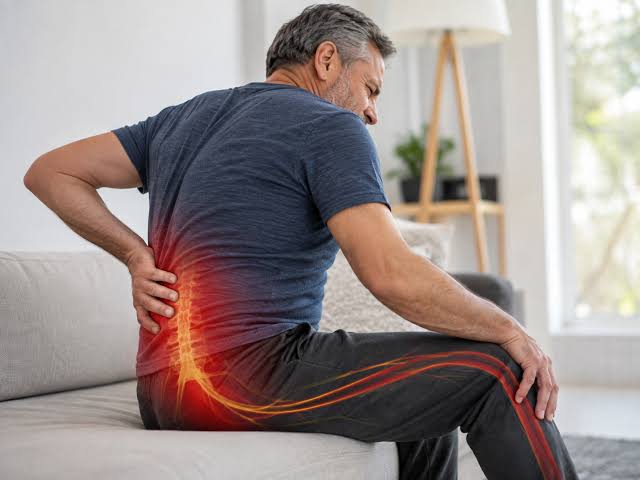
Back pain can be uncomfortable on its own, but when it travels down your leg, everyday activities like sitting at a desk, getting out of a car, walking around the house, or sleeping can become challenging. If your lower back pain spreads into your buttock, thigh, calf, or foot, it could be caused by nerve irritation, a herniated disc, age-related changes in the spine, or another musculoskeletal condition. One common cause is sciatica, which involves irritation or compression of the sciatic nerve or the nerve roots that contribute to it. However, not all pain that radiates down the leg is sciatica. Understanding the possible causes can help you recognize when home care may be appropriate and when it’s time to seek medical attention.
What Does It Mean When Back Pain Travels Down Your Leg?
Pain that starts in the lower back and extends into the buttock or leg is often described as radiating pain. Depending on the cause, it may feel like a sharp shooting sensation, burning, tingling, or an electric shock rather than a dull muscular ache. When a nerve in the lower spine becomes irritated or compressed, the resulting symptoms may travel along the nerve’s pathway. This can cause pain, numbness, tingling, or weakness in one leg, although both legs can sometimes be affected. Common symptoms include:
- Shooting, burning, or tingling pain that travels from the lower back into the buttock and leg
- Numbness in the thigh, calf, foot, or toes
- Muscle weakness or difficulty lifting the front of the foot
- Pain that worsens after prolonged sitting
- Increased discomfort when coughing, sneezing, or straining
- Difficulty standing or walking for extended periods
Symptoms vary from person to person. Some people experience severe leg pain with little back discomfort, while others have significant lower back pain accompanied by leg symptoms. Sciatica commonly affects one side of the body. New symptoms affecting both legs, especially when accompanied by weakness or numbness around the groin, require urgent medical assessment.
What Are the Common Causes of Back Pain That Radiates Down the Leg?
Several conditions can cause pain to travel from the lower back into the leg. A healthcare professional can assess your symptoms and determine the most likely cause.
Sciatica
Sciatica describes pain and other symptoms caused by irritation or compression of the sciatic nerve or its contributing nerve roots. The sciatic nerve travels from the lower back through the buttocks and down each leg. When the nerve roots become irritated, pain may extend along this pathway and sometimes reach the foot. Common symptoms include:
- Sharp or shooting pain from the lower back into the buttock and leg
- Burning or tingling sensations
- Numbness in parts of the leg or foot
- Muscle weakness in more significant cases
Symptoms may worsen with prolonged sitting, certain bending movements, coughing, or sneezing. Sciatica is not a diagnosis of the underlying cause itself. It can result from conditions such as a herniated disc or spinal stenosis, so identifying the source of the nerve irritation helps guide treatment.
Herniated or Bulging Disc
The discs between the vertebrae act as cushions, absorbing impact and allowing the spine to move. Over time, these discs can develop age-related changes, bulge outward, or develop a herniation. If a bulging or herniated disc presses on a nearby nerve root, it can cause pain that travels down the leg, along with tingling, numbness, or weakness. A disc problem may develop after lifting a heavy object, twisting while lifting, or experiencing an injury. However, it can also occur without a specific triggering event. It’s important to remember that a disc bulge or herniation seen on an MRI does not automatically mean it is causing your symptoms. Imaging findings must be interpreted alongside your medical history and physical examination.
Spinal Stenosis
Spinal stenosis occurs when spaces within the spine narrow and put pressure on nearby nerves. It is often associated with age-related changes, including arthritis and thickening of spinal tissues. Symptoms may include:
- Lower back pain that extends into one or both legs
- Numbness, tingling, or weakness
- Leg discomfort that worsens while standing or walking
- Symptoms that improve when sitting or bending forward
Some people find they can walk only a short distance before needing to stop and rest. This pattern may indicate nerve compression related to spinal stenosis and should be evaluated by a healthcare professional.
Degenerative Disc Disease and Spinal Arthritis
As people age, spinal discs may lose some of their height and flexibility. Arthritis can also develop in the small joints of the spine. These changes are common and do not always cause symptoms. However, in some people, they contribute to inflammation, stiffness, or narrowing around the nerves. If nerve roots become irritated or compressed, pain may radiate into the buttocks or legs. Treatment often begins with conservative approaches, such as physical therapy, appropriate exercise, and symptom management. More advanced treatments may be considered when symptoms are persistent or severe.
Spondylolisthesis
Spondylolisthesis occurs when one vertebra slips forward relative to the vertebra beneath it. Depending on the degree of slippage and the surrounding changes, this can narrow the spaces available for spinal nerves. Possible symptoms include:
- Lower back pain
- Tightness in the hamstrings
- Pain that extends into the buttocks or legs
- Numbness, tingling, or weakness
- Discomfort during standing, walking, or exercise
The degree of vertebral slippage does not always correspond directly to the severity of symptoms. A medical assessment can help determine whether the condition is responsible for your pain and which treatments may be appropriate.
Muscle Strain or Referred Pain
Not all pain that travels from the lower back into the leg originates from a compressed nerve. Strained muscles, irritated joints, and problems involving the hips or surrounding soft tissues can sometimes cause referred pain. This pain may be felt away from the structure responsible for it. Muscle-related pain often feels sore or aching and may worsen with particular movements. However, symptoms can overlap with nerve-related conditions, making it difficult to distinguish between them without an assessment. Numbness, tingling, or muscle weakness may suggest nerve involvement, but these symptoms alone cannot establish a diagnosis.
Comparing Common Causes of Radiating Leg Pain
| Symptom pattern | Possible explanation |
| Shooting pain from the lower back through the buttock and leg | Sciatica or nerve root irritation |
| Leg pain with tingling, numbness, or weakness | Possible nerve compression |
| Pain or heaviness that worsens with standing or walking and improves when sitting | Possible spinal stenosis |
| Localized soreness after lifting or an awkward movement | Possible muscle strain |
| Back stiffness with age-related changes | Possible degenerative disc disease or arthritis |
These patterns are general clues, not a substitute for a diagnosis. Several conditions can occur together, and symptoms may differ from the typical pattern.
When Should You Be Concerned About Back Pain That Radiates Down the Leg?
Radiating lower back pain often improves with appropriate care, but certain symptoms can indicate a serious medical problem.
Seek emergency medical attention immediately if you experience:
- New difficulty starting urination, inability to urinate, or loss of bladder control
- Loss of bowel control
- Numbness around the groin, genitals, buttocks, or inner thighs
- Severe or rapidly worsening weakness in one or both legs
- Sudden difficulty walking associated with significant weakness or neurological changes
These symptoms can indicate cauda equina syndrome or another serious problem involving the spinal nerves. Cauda equina syndrome is a medical emergency that may require urgent surgery. You should also seek prompt medical evaluation if your back pain is associated with fever, a significant injury, unexplained weight loss, a history of cancer, or persistent pain that is especially severe at night. If the pain is worsening, is not improving, or interferes with everyday activities, schedule an appointment with a healthcare professional.
How Is Radiating Lower Back Pain Diagnosed?
Diagnosing the cause of radiating leg pain usually begins with a medical history and physical examination. Your healthcare professional may ask:
- When did the pain begin?
- Where does it start, and how far does it travel?
- Does sitting, standing, walking, or bending make it worse?
- Do you experience numbness, tingling, or weakness?
- Have you had a recent injury or previous back problems?
- Have you noticed changes in bladder or bowel function?
During the physical examination, the clinician may assess your posture, walking pattern, muscle strength, sensation, reflexes, and range of movement.
When Is an MRI Needed?
An MRI is not necessary for every episode of lower back pain that radiates down the leg. Imaging may be recommended when symptoms are severe or persistent, when a serious underlying condition is suspected, or when the results could change the treatment plan. Urgent imaging may be necessary when symptoms suggest significant nerve compression or another medical emergency. In some cases, X-rays or other tests may also be considered. The goal is not simply to find abnormalities in the spine. It is to determine whether any findings explain your symptoms and help guide appropriate treatment.
Treatment Options for Radiating Lower Back Pain
Treatment depends on the underlying cause, the severity of your symptoms, your medical history, and whether nerve function is affected. Many people improve with nonsurgical treatment, although some conditions require specialist care.
Physical Therapy and Exercise
Physical therapy can help improve mobility, flexibility, strength, and the ability to perform daily activities. A physical therapist may recommend exercises that strengthen the core and hip muscles, improve movement, and reduce unnecessary stress on the spine. Your program should be tailored to your symptoms and abilities. Stop an exercise that causes new or worsening weakness, numbness, or radiating pain, and seek professional guidance. Consistency is important, but recovery may take time. Avoid forcing movements that aggravate your symptoms.
Medications
Depending on the cause of your pain and your medical history, a healthcare professional may recommend medication to help manage pain or inflammation. Different medicines have different risks, side effects, and interactions. Some may be unsuitable for people with kidney disease, heart conditions, stomach ulcers, or certain other health problems. Speak with a healthcare professional or pharmacist before starting a medication, particularly if you take other medicines or have existing medical conditions. Medication may help control symptoms, but it does not necessarily resolve the underlying cause.
Heat and Cold Therapy
Heat and cold may provide temporary relief for some types of back pain.
- Cold therapy: A cold pack wrapped in a towel may help relieve discomfort following an injury or flare-up.
- Heat therapy: A warm pack may help ease muscle tension and stiffness.
Apply either for short periods and never place ice or a heating device directly against your skin. Use extra caution if you have reduced sensation, as you may not notice skin damage. These methods can complement other treatments but should not replace medical assessment when warning signs are present.
Steroid Injections
In selected cases, a specialist may recommend an epidural steroid injection to reduce inflammation around irritated spinal nerves. The potential benefits, risks, and expected duration of relief vary depending on the underlying condition. Injections do not work for everyone and may provide temporary rather than lasting improvement. Your specialist can explain whether this option is appropriate and how it fits into your overall treatment plan.
Surgery and Other Procedures
Surgery may be considered when a specific spinal problem causes persistent, disabling symptoms despite appropriate nonsurgical treatment. It may also be necessary when there is significant or progressive neurological impairment or an emergency condition requiring urgent intervention. The appropriate procedure depends on the cause of the pain, the location of nerve compression, your overall health, and your treatment goals. A specialist can explain the expected benefits, risks, recovery time, and alternatives before you make a decision.
What Can You Do at Home to Help Relieve Radiating Leg Pain?
If you do not have emergency warning signs, several practical steps may help you manage symptoms while recovering.
- Stay gently active: Continue with comfortable daily activities as tolerated rather than spending prolonged periods in bed.
- Change positions regularly: Avoid remaining seated or standing in one position for too long.
- Modify lifting: Temporarily avoid heavy lifting and movements that aggravate your symptoms.
- Support your lower back: Adjust your chair and driving position to make sitting more comfortable.
- Try heat or cold: Use a wrapped pack for short periods if it provides relief.
- Return to exercise gradually: Choose gentle activities that do not worsen your symptoms.
Avoid aggressive stretching, forceful spinal manipulation, or exercises that trigger increasing pain, numbness, or weakness. If you have a chronic health condition or significant mobility limitations, ask your healthcare professional which activities are appropriate for you. Home care should not delay urgent evaluation if you develop new neurological symptoms or other warning signs.
Can You Prevent Radiating Back Pain From Returning?
Not every cause of radiating back pain can be prevented. However, healthy movement habits and appropriate conditioning may help reduce the risk of some episodes and support spinal health. Consider the following habits:
- Strengthen your core and hips: A suitable exercise program can improve strength and movement control.
- Stay physically active: Regular activity helps maintain mobility and overall fitness.
- Break up long periods of sitting: Stand, move around, and change positions regularly.
- Use sensible lifting techniques: Keep loads close to your body and avoid combining heavy lifting with twisting.
- Maintain a healthy weight: If appropriate for you, managing excess weight may reduce stress on the lower back.
- Adjust your work environment: Set up your desk, chair, or driving position to support comfortable posture.
- Address recurring symptoms early: Seek advice if pain repeatedly returns or begins affecting your daily activities.
A physical therapist can help develop a personalized program based on your movement patterns, strength, and medical needs.
When Should You See a Pain Management Specialist?
Consider consulting a pain management specialist if your lower back pain continues to radiate down your leg, affects your sleep, limits your mobility, or interferes with work and everyday activities. A specialist may review your medical history, physical examination findings, and any imaging results to help identify the source of your pain. Depending on the diagnosis, treatment may include medication management, physical therapy coordination, selected injections, or referral to a spine surgeon when appropriate. Pain management is not limited to medication or procedures. The goal is to reduce symptoms, improve function, and help you return to daily activities as safely as possible. Do not wait for a routine pain management appointment if you develop progressive leg weakness, new bladder or bowel problems, or numbness around the groin. Seek emergency medical care instead.
Frequently Asked Questions
Why does my lower back hurt and send pain down one leg?
This can occur when a spinal nerve becomes irritated or compressed. Common causes include sciatica associated with a herniated disc, spinal stenosis, or other age-related spinal changes. A muscle or hip problem can sometimes cause similar symptoms.
Does pain that radiates down the leg always mean sciatica?
No. Sciatica is a common cause, but referred pain from muscles, joints, and other structures can produce similar symptoms. An examination can help distinguish between possible causes.
Can sciatica heal on its own?
Yes. Many cases of sciatica improve over several weeks, although recovery varies depending on the cause and severity. Sciatica can be associated with a herniated disc, and symptoms may improve even while disc-related changes remain. Seek medical advice if symptoms worsen, persist, or include weakness or numbness.
Should I keep walking if my back pain travels down my legs?
Gentle walking is often helpful when tolerated. However, reduce or stop an activity that significantly worsens your symptoms. New weakness, difficulty walking, or other concerning neurological changes require prompt medical evaluation.
When is an MRI needed for lower back pain that radiates down the legs?
An MRI may be considered when symptoms persist despite appropriate treatment, when a serious condition is suspected, or when the results would affect decisions about treatment. Emergency symptoms may require urgent imaging. Many uncomplicated cases do not need an MRI immediately.
Can a herniated disc heal without surgery?
Yes. Many people with herniated discs improve with nonsurgical treatment. Symptoms may settle as inflammation decreases and the body gradually reabsorbs some of the herniated material. Surgery may be considered when symptoms remain disabling or when significant neurological problems develop.
What is the fastest way to relieve pain that radiates down the leg?
There is no single treatment that works for everyone. Gentle movement, comfortable positioning, and heat or cold may provide temporary relief. The most appropriate treatment depends on the underlying cause. Severe or worsening symptoms should be assessed by a healthcare professional.
Is lower back pain that radiates down both legs serious?
Pain affecting both legs can have several causes, but it deserves careful assessment, particularly if it begins suddenly or is accompanied by weakness or numbness. New bladder or bowel dysfunction, numbness around the groin, or rapidly worsening leg weakness requires emergency medical attention.
Get the Right Care for Radiating Back Pain
Back pain that travels down the leg can result from sciatica, a herniated disc, spinal stenosis, arthritis, muscle strain, or other conditions. Because these problems can produce similar symptoms, identifying the underlying cause is an important step toward choosing the right treatment. Many people improve with appropriate activity, physical therapy, and other nonsurgical approaches. Persistent symptoms, worsening pain, or neurological changes may require further investigation or specialist care. If radiating back pain is affecting your daily life, speak with a qualified healthcare professional about your symptoms and treatment options. Early assessment can help you understand what’s happening and determine the safest next steps.