
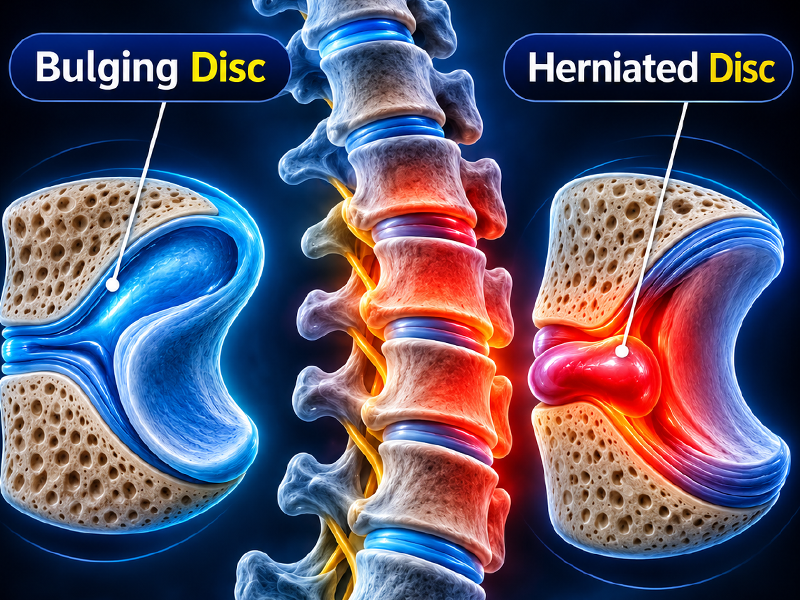
Back pain can develop during everyday activities, whether you are bending down to pick something up, getting out of bed, or working in the garden. While some episodes are related to muscle strain, others may involve the spinal discs. Bulging and herniated discs are two common spinal conditions associated with back pain. Although they are related, they describe different changes in the structure of a spinal disc. Spinal discs act as cushions between the vertebrae, absorbing impact and allowing the spine to bend and move. When a disc changes shape or becomes damaged, it may irritate nearby nerves and cause pain, numbness, tingling, or muscle weakness. For people in Arizona, activities such as gardening, landscaping, lifting, and weekend home improvement projects can place additional demands on the back. Understanding the differences between bulging and herniated discs can help you recognize possible symptoms and know when to seek medical advice.
What Is a Bulging Disc?
Spinal discs are flexible structures located between the vertebrae. Each disc has a tough outer layer and a softer, gel-like center. Together, these structures help absorb pressure and support movement. A bulging disc occurs when the outer portion of a disc extends beyond its normal boundaries. The disc generally remains intact, but its outer edge becomes wider or more prominent. This change often develops gradually due to age-related wear and tear, repeated strain, or changes in the disc’s structure. Not everyone with a bulging disc experiences symptoms. In fact, some people discover they have one during an MRI scan performed for an unrelated reason. Symptoms may develop when the bulging disc irritates or presses against a nearby nerve. Depending on its location, symptoms can include:
- Lower back pain or stiffness
- Pain in the buttocks or legs
- Numbness or tingling
- Discomfort that becomes worse with certain movements
- Muscle weakness if a nerve is affected
The severity of symptoms varies. A bulging disc may cause little discomfort in one person but more significant symptoms in another.
What Is a Herniated Disc?
A herniated disc involves a more specific change in the structure of a spinal disc. Each disc has two main components:
- Annulus fibrosus: The tough outer layer that surrounds the disc.
- Nucleus pulposus: The softer, gel-like material inside the disc.
A herniated disc occurs when some of the inner material pushes through a weakened or damaged area of the outer layer. It is also commonly called a slipped, ruptured, or prolapsed disc. Unlike a general bulge, a herniation involves disc material extending through the outer layer. This material may irritate or compress nearby spinal nerves, potentially causing symptoms that extend beyond the back. Depending on the location and severity, symptoms may include:
- Lower back or neck pain
- Pain that travels into the buttocks, legs, arms, or hands
- Burning sensations or tingling
- Numbness in the affected limb
- Muscle weakness
- Difficulty walking or lifting the foot in more significant cases
A herniated disc does not always cause severe pain. Some people have noticeable findings on an MRI but experience few or no symptoms.
Bulging Disc vs. Herniated Disc: Key Differences
Although both conditions affect spinal discs, the main difference is how the disc changes shape.
| Feature | Bulging Disc | Herniated Disc |
| Structure | The disc extends beyond its normal boundary, generally without a tear in the outer layer | Inner disc material pushes through a weakened or damaged outer layer |
| Development | Often develops gradually | Can develop gradually or following strain or injury |
| Common factors | Age-related changes, degeneration, and repeated strain | Disc degeneration, structural weakness, and physical strain |
| Nerve involvement | May irritate or compress nearby nerves | May irritate or compress nearby nerves |
| Possible symptoms | Back pain, stiffness, and sometimes nerve-related symptoms | Back pain, radiating pain, numbness, tingling, or weakness |
| Treatment | Often managed without surgery | Often managed without surgery, depending on symptoms and severity |
Neither condition is automatically more serious or painful than the other. The location of the disc change, its effect on nearby nerves, and the person’s symptoms are more important when determining its significance.
What Causes Bulging and Herniated Discs?
There is rarely just one reason why a spinal disc becomes damaged or changes shape. Several factors may contribute over time.
Age-Related Changes
As people get older, spinal discs gradually lose some of their water content. This can make them less flexible and more vulnerable to damage. Age-related disc degeneration is one of the common factors associated with bulging and herniated discs.
Improper Lifting
Lifting heavy objects without proper technique can place additional stress on the spine. This may happen when moving boxes, carrying bags of gravel, transporting gardening supplies, or handling furniture during a home renovation. Bending forward while lifting or twisting with a heavy object can increase the strain placed on the lower back.
Repeated Bending and Twisting
Activities involving frequent bending, twisting, or prolonged awkward positions may aggravate existing back problems. Examples include pulling weeds, laying flooring, moving landscaping materials, and performing repetitive household tasks. These activities do not automatically cause disc damage, but repeated strain may contribute to discomfort or worsen existing symptoms.
Prolonged Sitting
Sitting for extended periods can contribute to back stiffness and discomfort, particularly when combined with limited movement or poor workstation setup. Long commutes around the Phoenix metropolitan area and extended hours at a desk may aggravate existing lower back pain. Taking regular movement breaks and adjusting your sitting position can help reduce discomfort.
Excess Body Weight
Additional body weight can increase the mechanical demands placed on the spine, particularly the lower back. Maintaining a healthy weight through appropriate physical activity and balanced nutrition may help support overall spinal health.
What Does Disc-Related Pain Feel Like?
Symptoms can overlap between bulging and herniated discs, making it difficult to identify the exact condition based on pain alone. However, some common patterns may occur.
Bulging Disc Symptoms
People with a bulging disc may experience:
- Persistent or recurring lower back discomfort
- Stiffness after sitting or sleeping
- Pain that increases with certain movements
- Occasional tingling or numbness if nearby nerves are affected
Some people have no noticeable symptoms at all.
Herniated Disc Symptoms
A herniated disc may cause:
- Pain that travels from the lower back into one leg
- Burning or tingling sensations
- Numbness in the foot or toes
- Muscle weakness in the affected leg
- Discomfort that worsens with certain movements, coughing, or sneezing
When a disc in the lower back irritates nerves that contribute to the sciatic nerve, it may cause sciatica. For example, pain may begin in the lower back or buttocks and travel down the back of one leg. In some cases, leg pain may be more noticeable than back pain. Symptoms alone cannot confirm whether someone has a bulging or herniated disc. A proper medical assessment is important.
Can a Bulging Disc Become Herniated?
Yes, a disc that is already weakened or affected by degeneration may become more vulnerable to further structural changes. In some cases, disc material can eventually push through a damaged area of the outer layer, resulting in a herniation. However, not every bulging disc becomes herniated. Many people have bulging discs without significant symptoms or complications. Some never require treatment beyond monitoring their condition and managing any discomfort. A bulging disc should not automatically be considered an early stage of a herniated disc. The two conditions are different, and their progression varies from person to person.
How Are Bulging and Herniated Discs Diagnosed?
If back pain continues or spreads into the buttocks, legs, arms, or hands, a healthcare professional can assess the possible cause. The evaluation usually begins with a discussion about symptoms, medical history, daily activities, and any previous injuries. A physical examination may include:
- Checking muscle strength
- Testing reflexes
- Assessing sensation in the arms or legs
- Observing walking, balance, and movement
- Identifying movements that reproduce symptoms
Depending on the findings, additional imaging may be recommended.
MRI Scan
Magnetic resonance imaging (MRI) provides detailed images of spinal discs, nerves, and surrounding soft tissues. It is commonly used when a healthcare professional needs to investigate possible disc herniation or nerve compression.
X-Ray
X-rays can show spinal alignment, bone structure, and certain degenerative changes. However, they do not directly show most disc herniations.
CT Scan
A computed tomography (CT) scan provides detailed images of bones and may be useful in certain situations when additional information about the spine is needed. Not everyone with back pain requires imaging. A healthcare professional will determine whether an MRI, X-ray, CT scan, or another investigation is appropriate based on the symptoms and examination findings.
Treatment Options for Bulging and Herniated Discs
Many people with bulging or herniated discs improve without surgery. Treatment generally focuses on reducing pain, improving mobility, managing nerve-related symptoms, and helping individuals return to everyday activities. The appropriate approach depends on the location of the disc problem, symptom severity, and overall health.
Physical Therapy
Physical therapy is often an important part of recovery. A physical therapist may develop an exercise program to improve flexibility, strengthen supportive muscles, and help restore comfortable movement. Depending on the individual’s condition, treatment may include:
- Gentle stretching
- Core strengthening exercises
- Hip and lower back mobility exercises
- Posture and lifting guidance
- Gradual return to everyday activities
Exercises should be tailored to the person’s symptoms. If a movement increases radiating pain, numbness, or weakness, it should be discussed with a healthcare professional.
Medication
Depending on a person’s medical history and symptoms, a healthcare professional may recommend medication to help manage pain and inflammation. In some cases, prescription medication may also be considered for nerve-related pain. Medication choices should be discussed with a qualified healthcare professional, particularly when other medical conditions or medications are involved.
Activity Modification
Some activities may need to be temporarily adjusted while the back recovers. For example, Arizona residents who regularly garden or work on landscaping projects may benefit from:
- Taking shorter breaks between gardening tasks
- Avoiding heavy lifting when symptoms are aggravated
- Asking for help when moving furniture or heavy equipment
- Using tools that reduce the need for prolonged bending
- Alternating between sitting, standing, and walking
Complete inactivity is generally not recommended for routine back pain. Gentle movement, within a person’s tolerance, can help maintain mobility.
Epidural Steroid Injections
In certain cases, an epidural steroid injection may be considered to reduce inflammation around irritated spinal nerves. The goal is to provide temporary symptom relief, which may make it easier to participate in physical therapy and other rehabilitation activities. The benefits and potential risks should be discussed with a healthcare professional.
Surgery
Surgery may be considered when symptoms remain significantly limiting despite appropriate non-surgical treatment or when serious or progressive neurological problems develop. The procedure depends on the location and type of disc problem. For example, a discectomy involves removing the portion of a disc that is pressing on a nerve. Most people with bulging or herniated discs do not need surgery. A specialist can help determine whether a surgical procedure is appropriate.
When Should You Consult a Doctor?
Occasional back discomfort may improve with appropriate activity adjustments and conservative care. However, persistent or recurring pain should not be ignored. Consider seeking medical advice if you:
- Experience back pain that does not improve
- Have pain that travels into your buttocks, legs, arms, or hands
- Notice ongoing numbness or tingling
- Have difficulty walking or standing
- Experience weakness in an arm, leg, hand, or foot
- Find that pain is affecting your sleep or daily activities
Seek emergency medical attention if you experience:
- New loss of bladder or bowel control
- Difficulty starting or passing urine
- Numbness around the groin, inner thighs, or saddle area
- Severe or rapidly worsening weakness in the legs
These symptoms may indicate cauda equina syndrome, a rare but serious condition involving compression of the nerves at the base of the spine. It requires urgent medical evaluation.
How Can You Protect Your Back?
Staying physically active is generally beneficial for back health. You do not need to avoid everyday activities simply because you are concerned about spinal discs. Instead, focus on safe movement and appropriate activity levels. A few practical habits can help reduce unnecessary strain.
Use proper lifting techniques: Bend at your hips and knees, keep heavy objects close to your body, and avoid twisting while carrying them.
Break up demanding tasks: Instead of spending an entire afternoon bending over a garden bed, divide gardening and home improvement work into shorter sessions.
Improve your workstation: Position your computer screen comfortably and avoid remaining in the same sitting position for extended periods.
Stay active: Walking and other suitable low-impact activities can help maintain mobility and general fitness.
Strengthen supportive muscles: Appropriate core and hip exercises can improve strength and support comfortable movement.
Pay attention to symptoms: If an activity causes radiating pain, numbness, tingling, or muscle weakness, stop and seek professional advice.
Arizona’s climate allows many people to spend considerable time outdoors, whether gardening, landscaping, painting, or working on home improvement projects. Pacing these activities and taking regular breaks can help reduce unnecessary strain. You do not have to push through back pain to finish a task.
Frequently Asked Questions
Is a bulging disc worse than a herniated disc?
Not necessarily. A bulging disc extends beyond its normal boundary, while a herniated disc involves inner disc material pushing through a weakened or damaged outer layer. Either condition can cause significant symptoms depending on its location and effect on nearby nerves.
Can a bulging disc heal on its own?
Many people experience significant improvement in symptoms without surgery. However, symptom improvement does not necessarily mean the disc has returned to its original shape. Treatment and recovery vary depending on the individual.
Can you have a herniated disc without back pain?
Yes. Some people have a herniated disc without noticeable symptoms. Others may experience leg pain, numbness, or tingling with little or no back pain.
Which is more painful: a bulging or herniated disc?
There is no universal answer. A relatively small herniation can irritate a nerve and cause considerable pain, while a larger bulge may cause few symptoms. The location and degree of nerve involvement are important factors.
Do bulging and herniated discs always require surgery?
No. Many cases improve with non-surgical treatment, including physical therapy, activity modification, and appropriate medication. Surgery is generally considered only in specific situations, such as persistent disabling symptoms or significant neurological problems.
Can I walk with a bulging or herniated disc?
Gentle walking is often encouraged when tolerated because it helps maintain movement and mobility. However, activity should be adjusted if it significantly increases pain or other symptoms. Seek medical advice if you experience worsening numbness or weakness.
Final Thoughts
Bulging and herniated discs are related conditions, but they involve different changes in the structure of the spinal discs. Both may cause back pain and, in some cases, irritation or compression of nearby nerves. Understanding the difference is useful, but identifying the source of your symptoms is equally important. A proper assessment can help determine whether the discomfort is related to a spinal disc, another back condition, or a different underlying cause. Whether you work at a desk in Phoenix, transport landscaping supplies around Scottsdale, or spend weekends working on your garden, persistent back pain should not become something you simply accept. With appropriate medical guidance, activity adjustments, and a suitable treatment plan, many people can manage their symptoms and return to their usual routines. If you are experiencing ongoing back pain, radiating leg pain, numbness, or unexplained muscle weakness, speak with a qualified healthcare professional about an appropriate evaluation.
