
At Laser Pain Center, we deliver exceptional results paired with unrivaled patient satisfaction and compassionate care.
- Phone:520-836-8644
- Email: [email protected]
- Arizona, United States
At Laser Pain Center, we deliver exceptional results paired with unrivaled patient satisfaction and compassionate care.
Arizona, USA
Monday - Friday:8am - 5pm
Saturday-Sunday: Closed
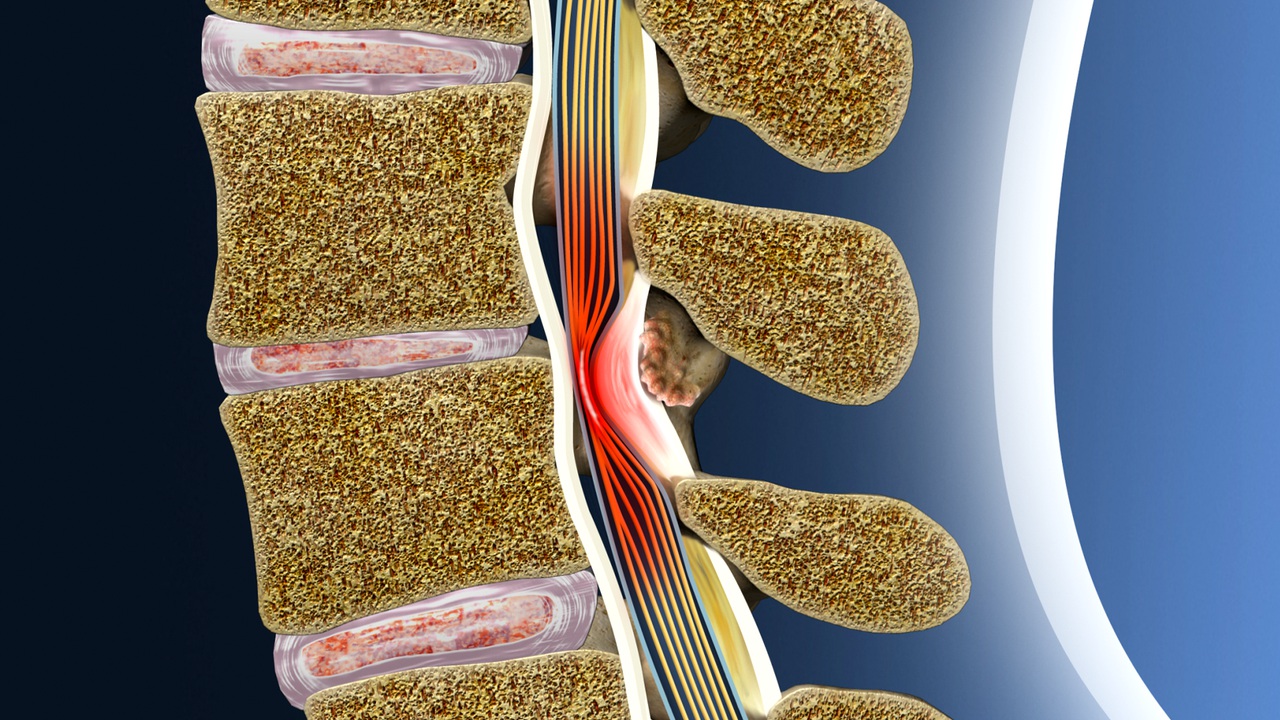
Lower back pain, leg discomfort, numbness, and difficulty walking can make everyday activities challenging. For people living with lumbar spinal stenosis, even standing for a few minutes or walking short distances can become uncomfortable.
The MILD® (Minimally Invasive Lumbar Decompression) procedure is an outpatient treatment designed to relieve pressure on spinal nerves caused by certain anatomical changes associated with lumbar spinal stenosis.
Unlike traditional open spinal surgery, the MILD® procedure uses specialized instruments and a small incision to remove small amounts of excess bone and thickened ligament tissue that contribute to narrowing in the spinal canal.
At Laser Pain Institute, our goal is to help patients understand their treatment options and explore personalized approaches to managing chronic lower back and leg pain.
Schedule a Consultation to Learn Whether the MILD® Procedure May Be Right for You.
The MILD® procedure is a minimally invasive treatment developed for patients experiencing symptoms of lumbar spinal stenosis (LSS).
Lumbar spinal stenosis occurs when the spinal canal or spaces around the spinal nerves become narrowed. One common contributor is the thickening of a ligament called the ligamentum flavum, which can take up additional space within the spinal canal and place pressure on nearby nerves.
This compression may cause:
The MILD® procedure addresses certain sources of this narrowing by removing small portions of excess ligament tissue and, when appropriate, small amounts of bone.
The goal is to create additional space for the affected nerves, reduce compression, and help improve mobility without the need for traditional open spinal surgery.
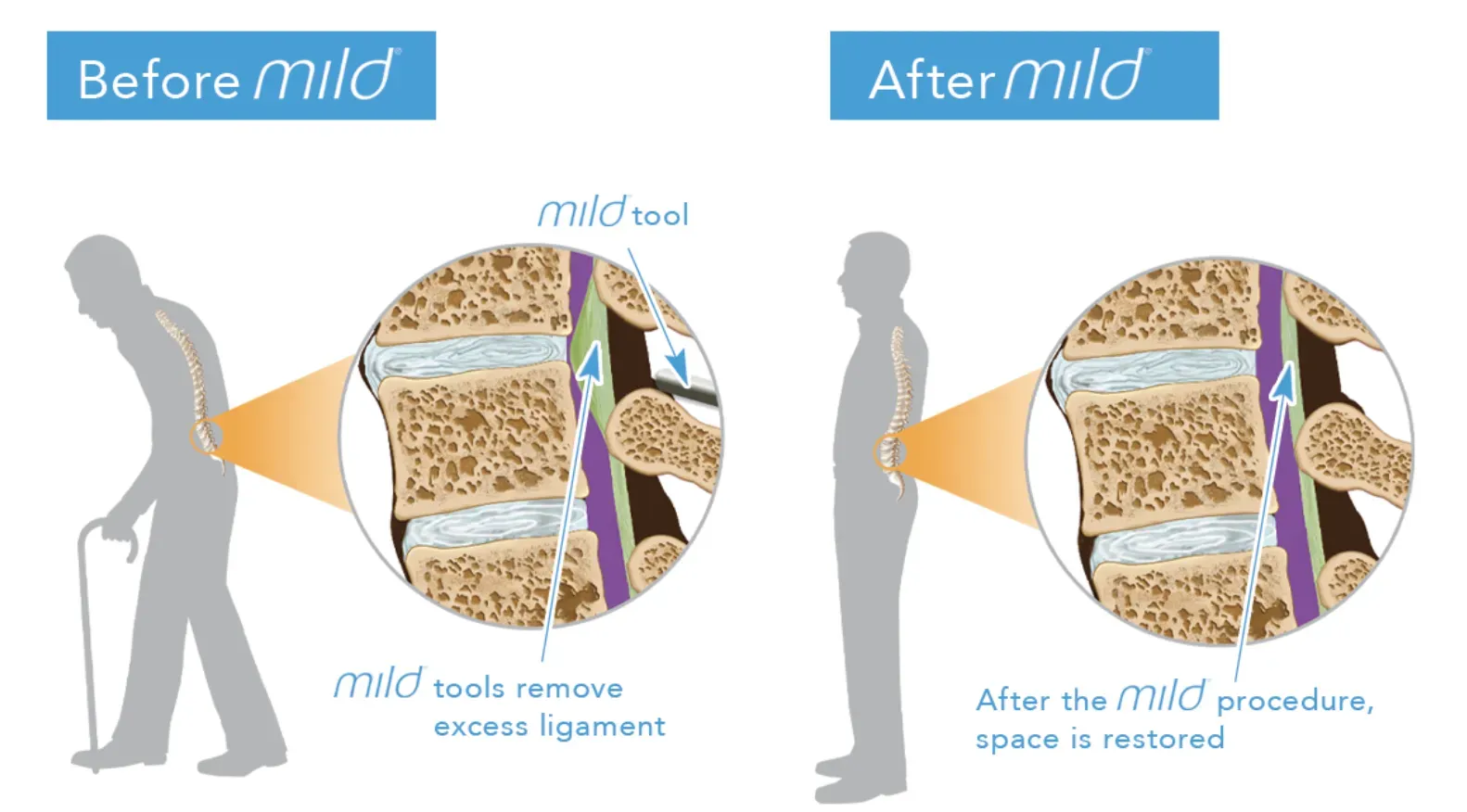
The MILD® procedure is primarily designed for patients with lumbar spinal stenosis involving thickened ligamentum flavum.
Lumbar spinal stenosis is a narrowing of the spinal canal in the lower back. It can compress spinal nerves and cause back pain, leg discomfort, numbness, and reduced mobility.
Neurogenic claudication is a common symptom of lumbar spinal stenosis. It causes pain, heaviness, tingling, or weakness in the legs when standing or walking. Symptoms often improve when sitting or leaning forward.
The ligamentum flavum connects the bones of the spine and helps support spinal stability. As people age, this ligament can become thicker, contributing to narrowing of the spinal canal and nerve compression.
Some patients experience persistent lower back pain and radiating leg symptoms because of pressure on the spinal nerves. When thickened ligamentum flavum contributes to the condition, MILD® may be an appropriate treatment option.
Important: The MILD® procedure does not treat every cause of lumbar spinal stenosis. A physician must review imaging results and evaluate the underlying cause of nerve compression before recommending treatment.
For appropriately selected patients, the MILD® procedure may offer several advantages:
Minimally Invasive: Uses a small incision rather than the larger incision associated with traditional open spinal surgery.
Outpatient Treatment: Typically performed in an outpatient setting without an overnight hospital stay.
Targeted Decompression: Removes specific tissue contributing to spinal canal narrowing.
No Implants Required: Does not require the placement of hardware or spinal implants.
Preserves Spinal Stability: Removes limited amounts of tissue without the extensive bone removal associated with some traditional decompression surgeries.
Potential Improvement in Mobility: May help reduce symptoms that interfere with standing, walking, and everyday activities.
Shorter Recovery Compared With Open Surgery: Generally involves a less extensive recovery process than traditional open spinal surgery.
Individual results vary, and pain relief is not guaranteed.
The MILD® procedure may be considered for patients who:
The MILD® procedure is generally performed on an outpatient basis, allowing most patients to return home the same day.
Recovery varies depending on the patient’s condition and overall health.
Following the procedure, you may experience:
No. The MILD® procedure is a minimally invasive spinal decompression treatment performed through a small incision. It does not involve the larger incision or extensive tissue disruption associated with traditional open spinal surgery.
The procedure commonly takes approximately one hour, although the actual duration depends on the patient's condition and treatment requirements.
Not usually. The procedure is commonly performed using local anesthesia with sedation, depending on the patient's medical needs and the physician's approach.
No. The procedure does not require spinal implants, screws, or hardware to achieve decompression.
Recovery varies from patient to patient. Many individuals return to light activities relatively quickly, while improvement in symptoms and mobility may develop over the following weeks.
Living with lumbar spinal stenosis can make walking, standing, and enjoying everyday activities difficult. If lower back pain or leg discomfort is limiting your mobility, learning about available treatment options is an important first step.
At Laser Pain Institute, we help patients explore individualized approaches to managing chronic spinal pain and improving daily function.
The MILD® procedure may offer an option for appropriately selected patients seeking relief from symptoms associated with lumbar spinal stenosis.
Contact Laser Pain Institute today to schedule a consultation and find out whether the MILD® procedure may be right for you.