
At Laser Pain Center, we deliver exceptional results paired with unrivaled patient satisfaction and compassionate care.
- Phone:520-836-8644
- Email: [email protected]
- Arizona, United States
At Laser Pain Center, we deliver exceptional results paired with unrivaled patient satisfaction and compassionate care.
Arizona, USA
Monday - Friday:8am - 5pm
Saturday-Sunday: Closed
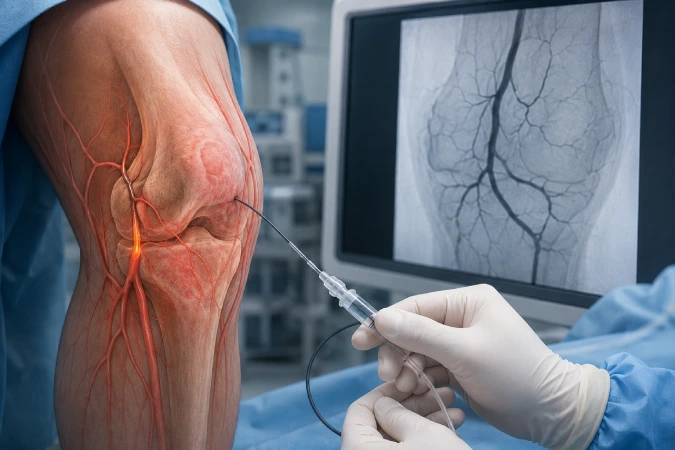
Chronic knee pain can make everyday activities such as walking, climbing stairs, standing, and exercising increasingly difficult. For individuals living with knee osteoarthritis, persistent discomfort and inflammation can significantly affect mobility and quality of life.
Genicular Artery Embolization (GAE) is a minimally invasive, image-guided procedure designed to help reduce chronic knee pain associated with osteoarthritis. It works by targeting abnormal blood vessels around the knee joint that may contribute to inflammation and persistent pain.
GAE may be an option for appropriately selected patients who have not experienced sufficient relief from conservative treatments and want to explore alternatives to, or potentially delay, knee replacement surgery.
At Laser Pain Institute, our goal is to help patients understand their treatment options and explore personalized approaches to managing chronic knee pain.
Schedule a Consultation to Learn Whether GAE May Be Right for You.
Genicular Artery Embolization (GAE) is a minimally invasive procedure that targets small blood vessels surrounding the knee joint.
In some patients with knee osteoarthritis, abnormal blood vessel growth and increased blood flow around the joint lining may contribute to inflammation and persistent pain.
During GAE, an interventional specialist uses image guidance to identify and selectively treat these abnormal blood vessels. Tiny embolic particles are delivered through a specialized catheter to reduce blood flow to the targeted vessels.
The goal is to reduce inflammation-related pain while preserving the surrounding healthy tissues and structures of the knee.
Unlike traditional knee replacement surgery, GAE does not involve replacing the joint with artificial components.
GAE is primarily being studied and used for selected patients with chronic knee pain associated with osteoarthritis.
Knee osteoarthritis is a degenerative joint condition that develops as the protective cartilage within the knee gradually breaks down. It can cause pain, stiffness, swelling, and reduced mobility.
GAE may help selected patients manage pain associated with osteoarthritis.
Persistent knee pain can interfere with walking, exercise, and everyday activities. When symptoms are associated with osteoarthritis and have not responded adequately to conservative treatments, GAE may be considered.
Inflammation of the synovial lining and abnormal blood vessel growth may contribute to pain in some patients with osteoarthritis. GAE targets selected abnormal vessels associated with these changes.
Some patients continue experiencing knee discomfort despite physical therapy, activity modification, medications, or other non-surgical treatments. GAE may provide an additional treatment option for appropriately selected individuals.
Important: GAE is not suitable for every type of knee pain. A specialist must evaluate the underlying condition and determine whether abnormal vascular changes associated with osteoarthritis are contributing to the symptoms.
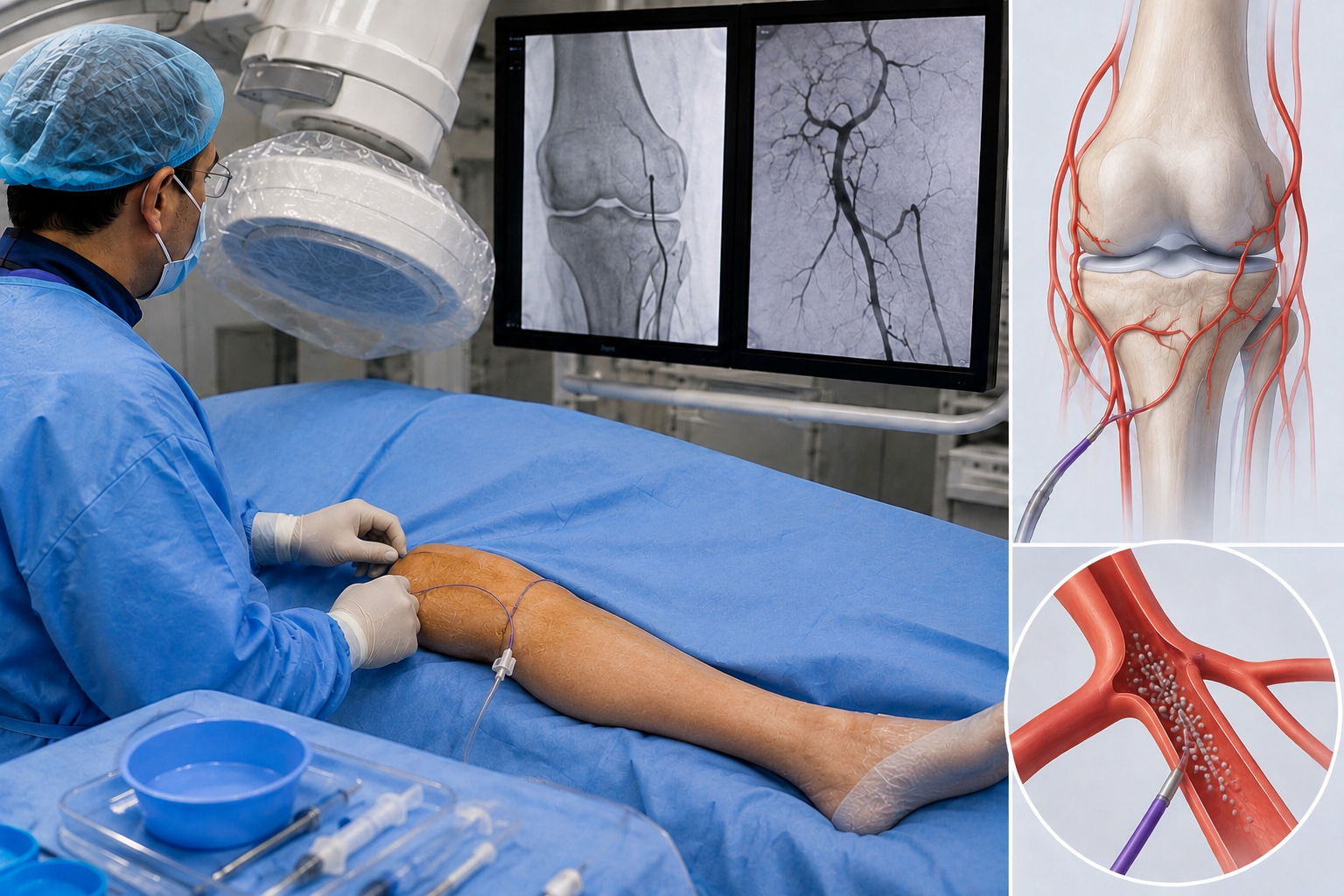
Genicular Artery Embolization uses advanced imaging technology and a specialized catheter to target abnormal blood vessels around the knee.
The physician reviews your medical history, knee symptoms, previous treatments, and relevant imaging studies. The evaluation helps determine whether GAE may be appropriate for your condition.
The patient is positioned for the procedure, and the treatment area is cleaned using sterile techniques. Local anesthesia is administered at the catheter access site. Sedation may also be used when appropriate.
A small catheter is inserted into an artery, commonly through the upper thigh or wrist, depending on the physician’s approach.
Using fluoroscopy (real-time X-ray imaging), the specialist carefully guides the catheter toward the arteries supplying the knee joint.
Contrast dye is injected to visualize the blood vessels around the knee. The physician identifies abnormal vessels associated with increased vascularity around the affected joint.
Tiny embolic particles are delivered through the catheter to selectively reduce blood flow in the targeted abnormal vessels.
This process aims to reduce the abnormal vascular activity associated with inflammation and chronic knee pain.
Once the treatment is completed, the catheter is removed and pressure is applied to the access site. Patients are monitored before returning home with individualized recovery instructions.
For appropriately selected patients, GAE may offer several potential advantages:
Results vary between individuals. GAE does not reverse cartilage damage or cure osteoarthritis, and long-term outcomes are still being studied.
Genicular Artery Embolization may be considered for patients who:
A specialist will evaluate your symptoms, medical history, imaging findings, and overall health before determining whether GAE is appropriate.
Recovery following GAE varies depending on the patient’s condition and individual response to treatment.
Most patients are monitored for a period after the procedure and can return home the same day.
Some patients may experience temporary symptoms, including:
Pain improvement may develop gradually over the weeks following the procedure rather than immediately.
Your physician may recommend a gradual return to normal activities based on your recovery.
A personalized rehabilitation plan may include:
Following your physician’s recommendations can help support knee function and overall recovery.
Although GAE is minimally invasive, it is still an interventional vascular procedure and carries potential risks.
Possible complications include:
Your physician will review your medical history, potential risks, and treatment alternatives before recommending the procedure.
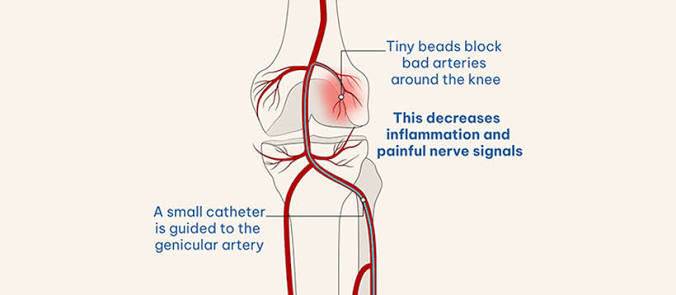
GAE is a minimally invasive, image-guided interventional procedure. It uses a small catheter inserted into an artery rather than requiring traditional open knee surgery.
GAE may help reduce pain associated with knee osteoarthritis by targeting abnormal blood vessels contributing to inflammation. However, it does not repair damaged cartilage or reverse the underlying joint degeneration.
GAE may be an option for selected patients who want to explore minimally invasive treatments before considering knee replacement. It does not replace the role of knee replacement when surgery is medically necessary.
The procedure commonly takes approximately one to two hours, depending on the patient's anatomy, the number of vessels treated, and procedural requirements.
Usually, GAE is performed using local anesthesia at the catheter access site, sometimes with sedation. General anesthesia is not typically required.
Chronic knee pain should not have to prevent you from enjoying everyday activities. If osteoarthritis-related discomfort is affecting your mobility and conservative treatments have not provided sufficient relief, exploring additional treatment options may be worthwhile.
At Laser Pain Institute, we are committed to helping patients understand their conditions and explore personalized approaches to pain management.
Genicular Artery Embolization may offer an additional option for appropriately selected patients seeking a minimally invasive approach to managing chronic knee pain.
Contact Laser Pain Institute today to schedule a consultation and learn whether GAE may be right for you.